Forestry Mulching
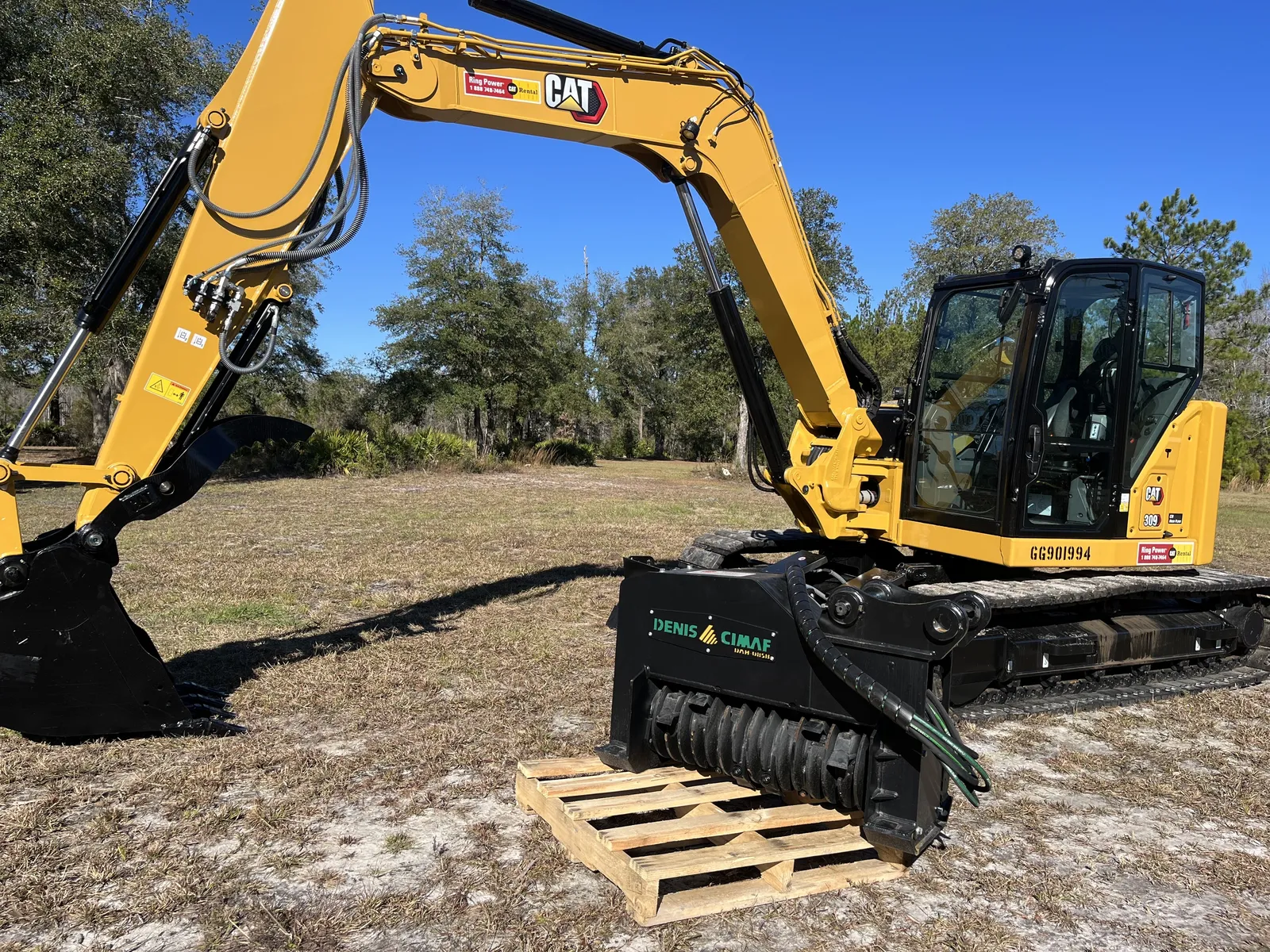
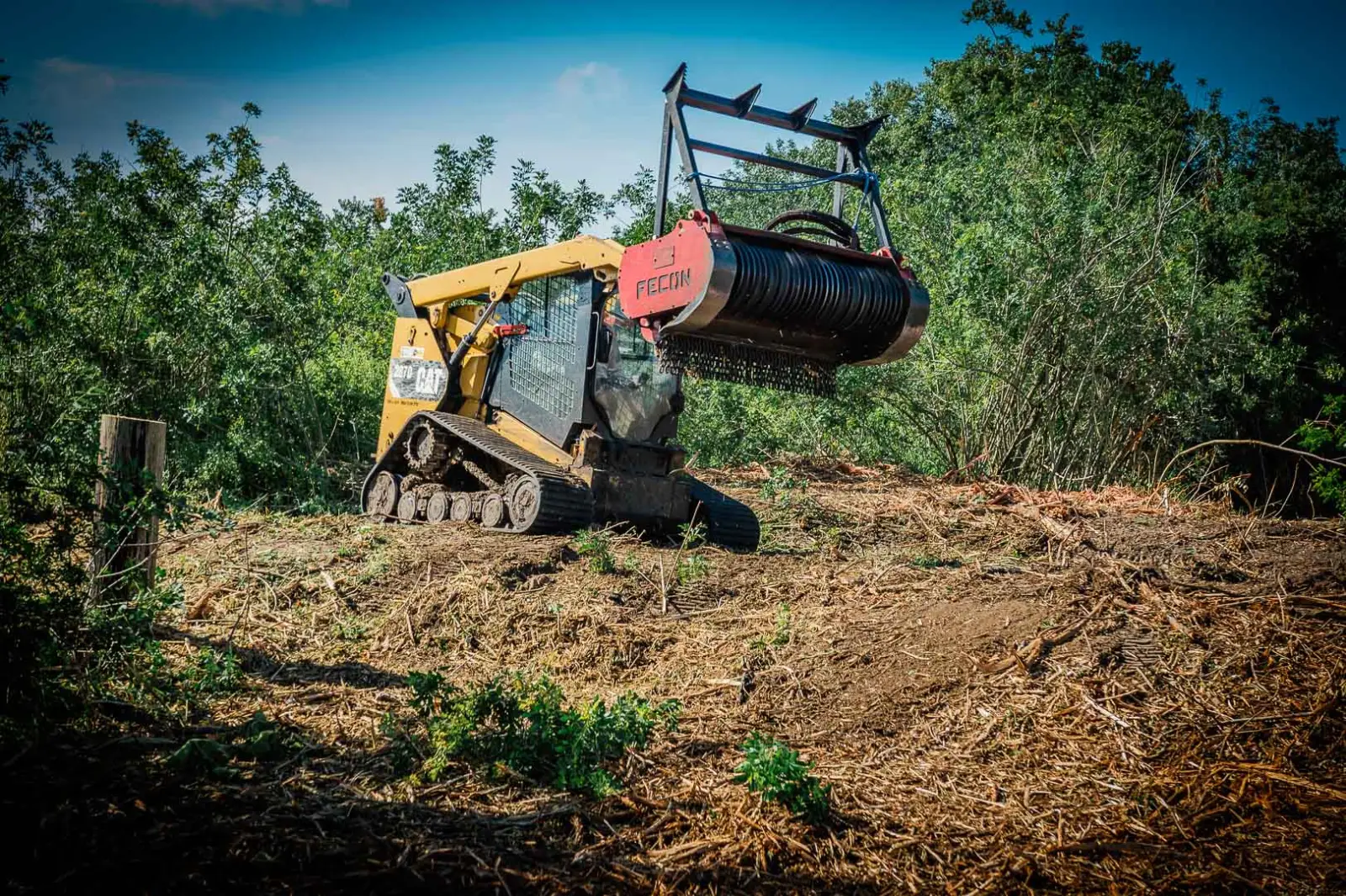
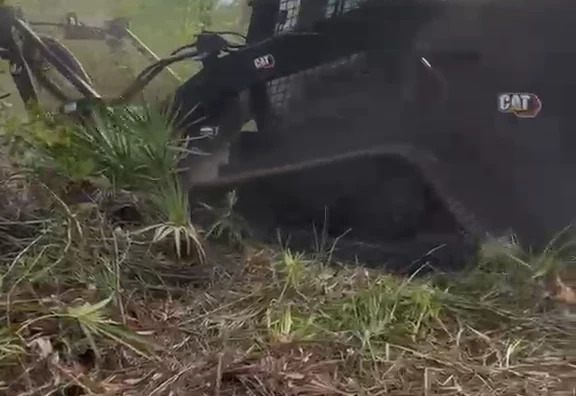
We mulch brush, underbrush and small trees in place with a skid steer mulching head and an excavator mulching head. The wood stays on the ground as mulch, so the tract opens up without burn piles or hauling.
Learn More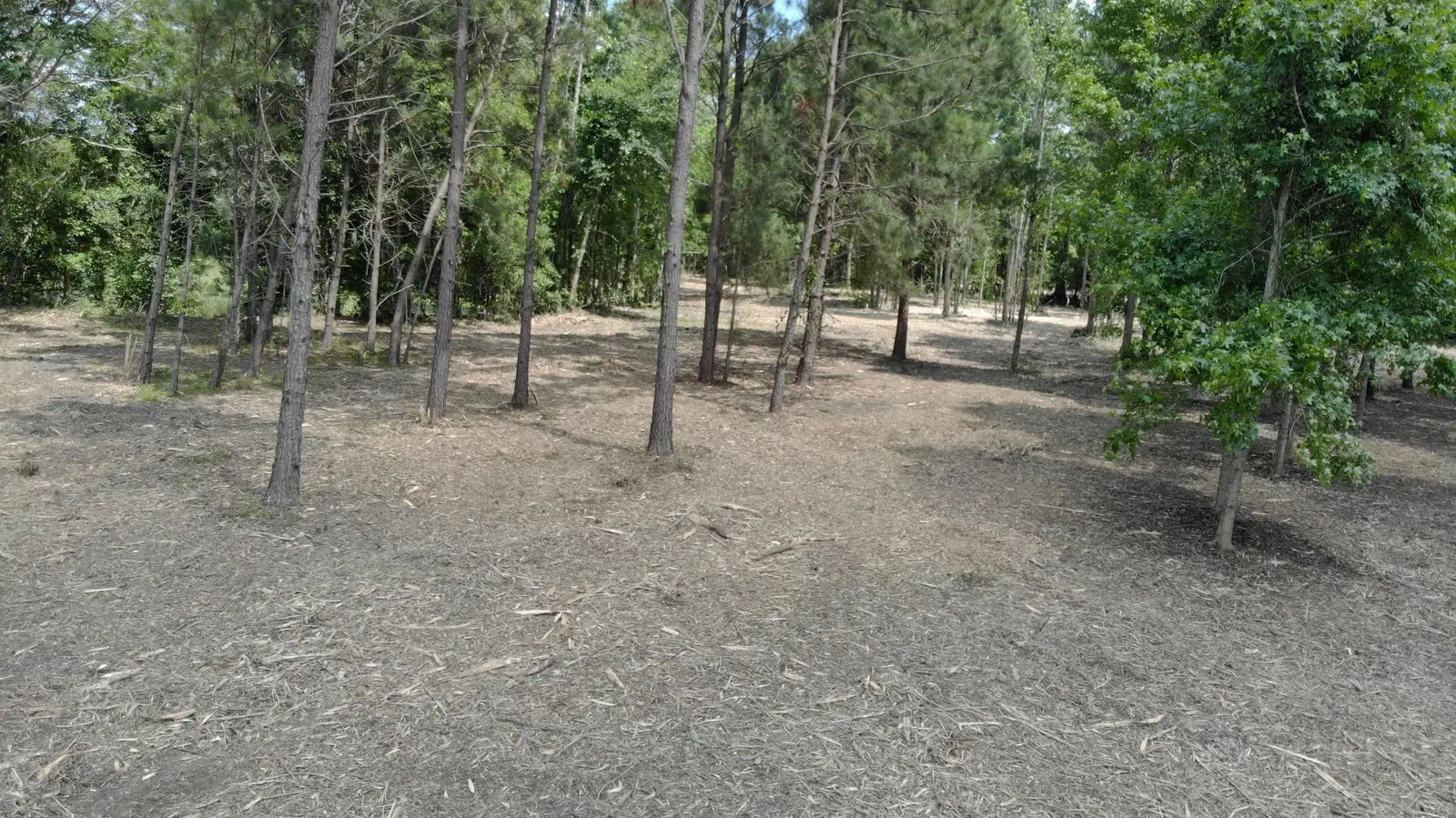
Brush clearing opens up land that has grown in with underbrush, vines and saplings. A common job around Monticello is big oaks and pines standing in underbrush that has never been cleared out. We take the brush out from under them and leave the trees standing. You get back open, walkable ground with the shade still overhead.
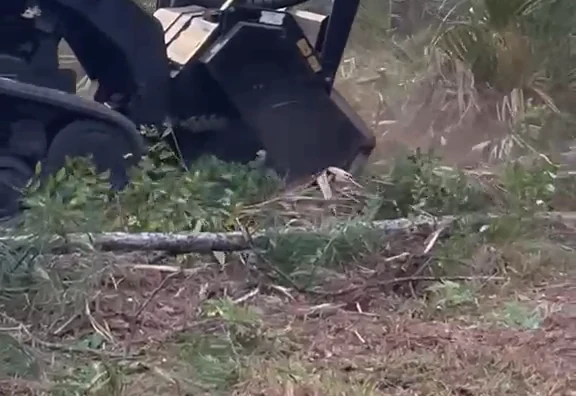
Skid steer brush work is what we do most, and there is plenty of it on land around here. The skid steer mulching head grinds brush where it stands and leaves it on the ground. Banks, ditches, wet ground and tight spots go to the excavator mulching head. The method behind the work is forestry mulching.
Tell us about the job. We will get right back to you.
Brush is the woody growth between the ground and the tree limbs. That means shrubs, saplings, briars and vines. On the pine flatwoods south and east of Monticello, the brush is often saw palmetto and gallberry. UF/IFAS names both among the plants that mark flatwoods soils.
Monticello sits in the Red Hills, rolling country with red clay soils. In the woods here, vines grow up through the brush and climb into the trees. Greenbrier, muscadine grape, poison ivy and Virginia creeper are among the woody vines of North Florida.
Selective clearing is the heart of the job, so flag the trees you want kept. The skid steer mulching head clears close around the trunks. Where trees stand tight, the excavator reaches in while its tracks stay back. The roots stay in the ground, and bare dirt with the stumps pulled is land clearing.
Fence rows and field edges grow in because nothing grazes or mows right against them. Fence work is a big part of what we do. Brush in the wire itself is fence line clearing. The field edge beside it can open up in the same trip.
Pasture that sits ungrazed fills in with saplings and briars, and old home places go under brush and vines. Taking a whole field back to grass is our pasture clearing work. Around homesites, barns and ponds, brush closes in on the buildings and the water. We clear it back to open ground and leave the shade trees. On hunting ground the same work opens trails and plot edges, which is hunting land clearing.
Pond and creek banks are the hard spots, since the ground slopes and stays soft. The excavator sits on firm ground and reaches down the bank with its mulching head. It works canal banks, creek banks and ditch banks where a skid steer would bog down. That reach is why we run a mulching head on the excavator as well as the skid steer.
The cut brush is ground into wood chips that stay on the ground where it grew. The chips break down there over time, and we do not burn brush. Brush that has to leave the property goes out as debris removal, with the dump truck and dump trailer. Old piles already on the ground go the same way.
Clearing cuts brush off at the ground, and the roots stay put. UF/IFAS extension writes that cut trees resprout hard in a relatively short time. Greenbrier grows a huge root system that works like a storage organ. A lighter pass later keeps the ground open.
The best time to clear is when the ground is dry. UF/IFAS advises against machine work in the wet season, when the water table is high and the ground is wet. Its guidance is that the drier the site, the lower the chance of damage. On wet sites the excavator can work from firmer ground and reach in.
Free, no-obligation estimates across North Florida and South Georgia.
(850) 815-0054From the first call or text to the last load hauled off, here is how it goes.
Call or text (850) 815-0054 with where the property is and what you want done. A rough idea of the acreage helps.
We drive out and look at the ground, the growth and the access for the machines. That visit is the free estimate.
The land decides between mulching in place and a full clear with the debris hauled off. Thick understory usually mulches. Ground going under a building usually gets a full clear with the stumps out.
We haul the excavator and the skid steer in on our own trailers. Clearing, mulching, stump work and load-out run in whatever order the job calls for.
Debris is mulched in place or loaded into the dump truck and hauled off. We leave the ground open and usable, and you look it over before the machines leave.
Common questions about brush clearing across North Florida and South Georgia. If yours is not here, call or text and ask.
We mulch brush, underbrush and small trees in place with a skid steer mulching head and an excavator mulching head. The wood stays on the ground as mulch, so the tract opens up without burn piles or hauling.
Learn More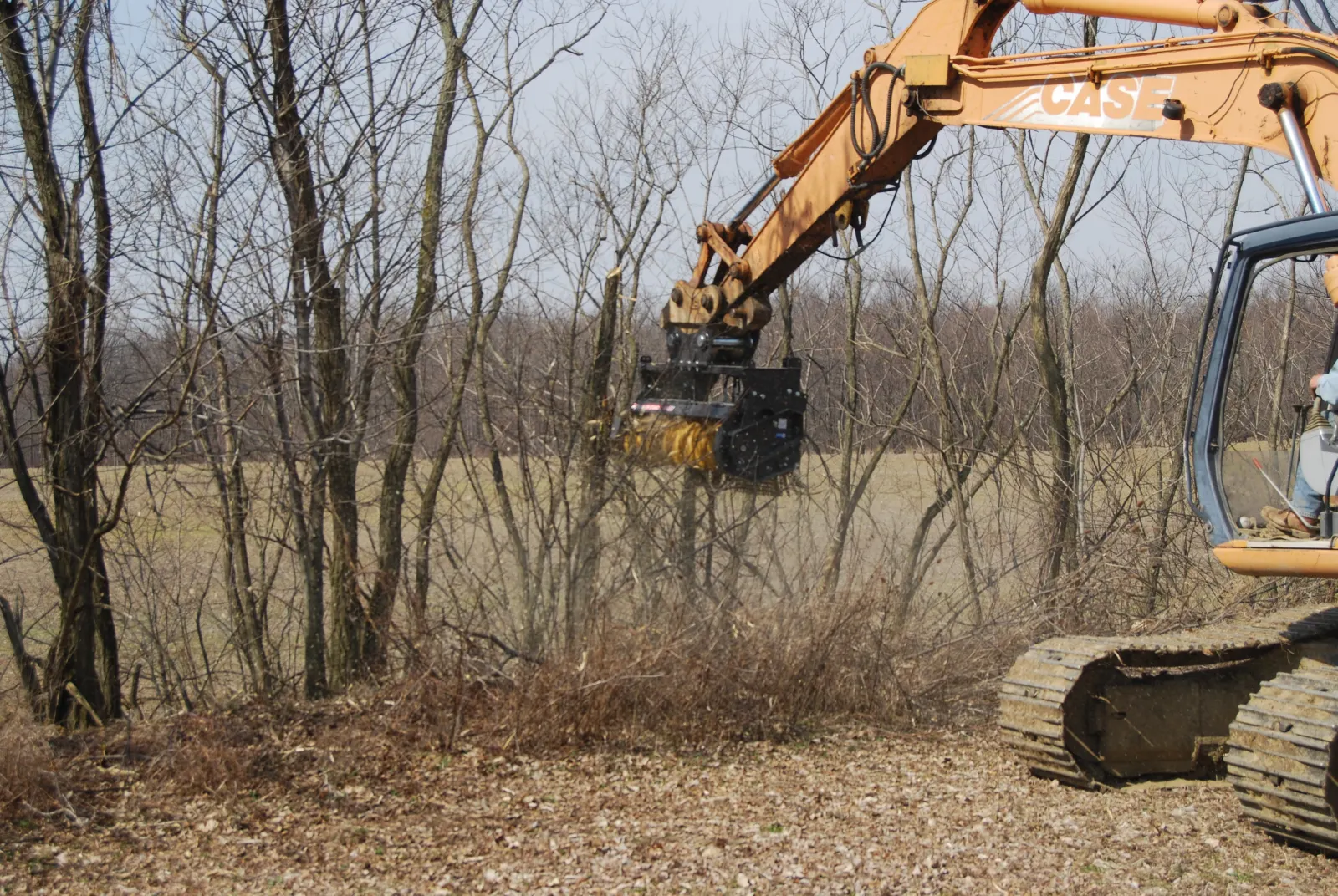
We run a mulching head on the excavator boom to clear ditch banks, creek banks and pond edges. The machine works from firm ground above, so the soft ground below stays put.
Learn More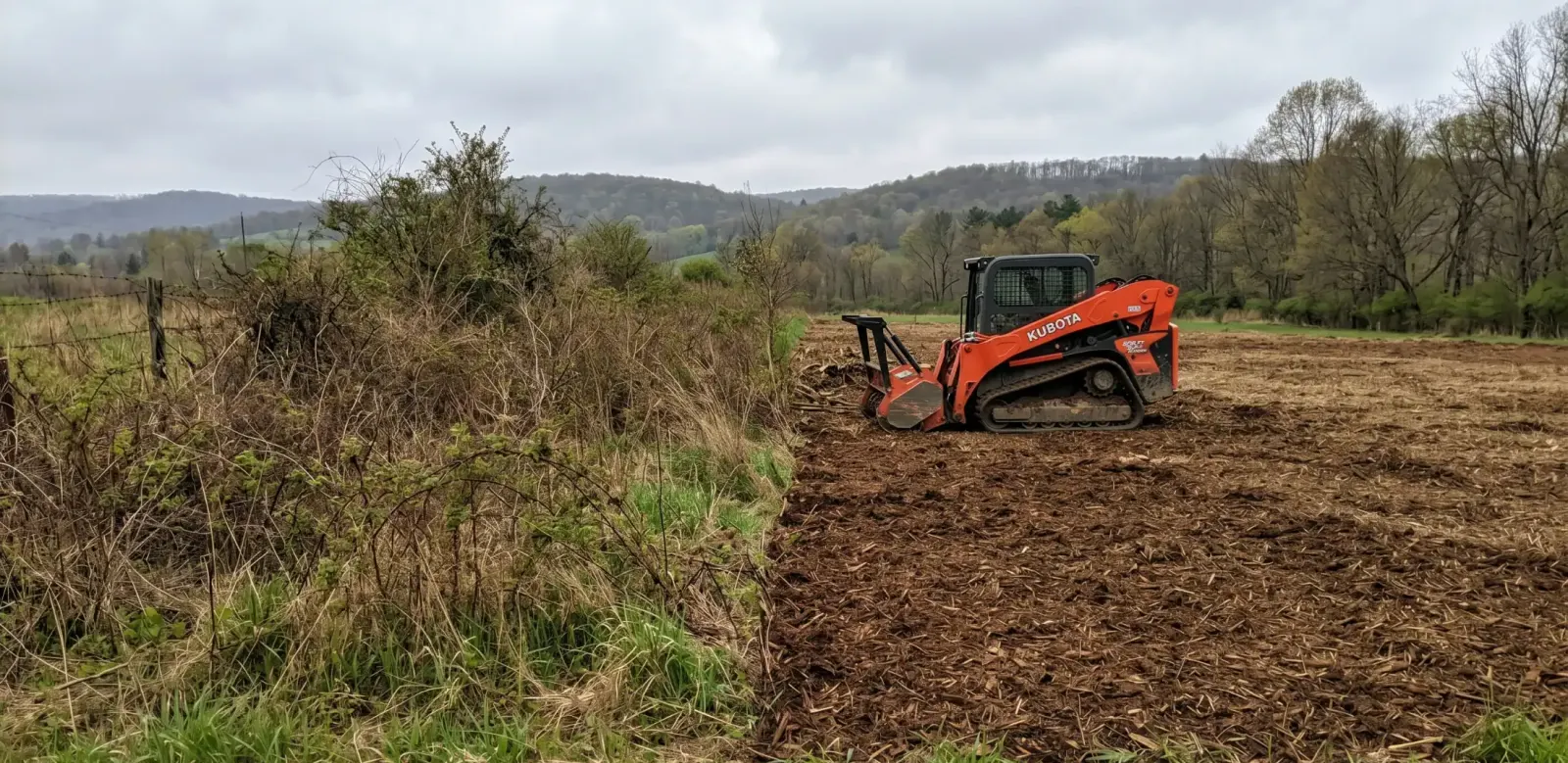
We clear brush, vines and saplings off farm and pasture fence rows so the fence can be seen and worked on. The excavator reaches in from the side and keeps the machine off your wire.
Learn More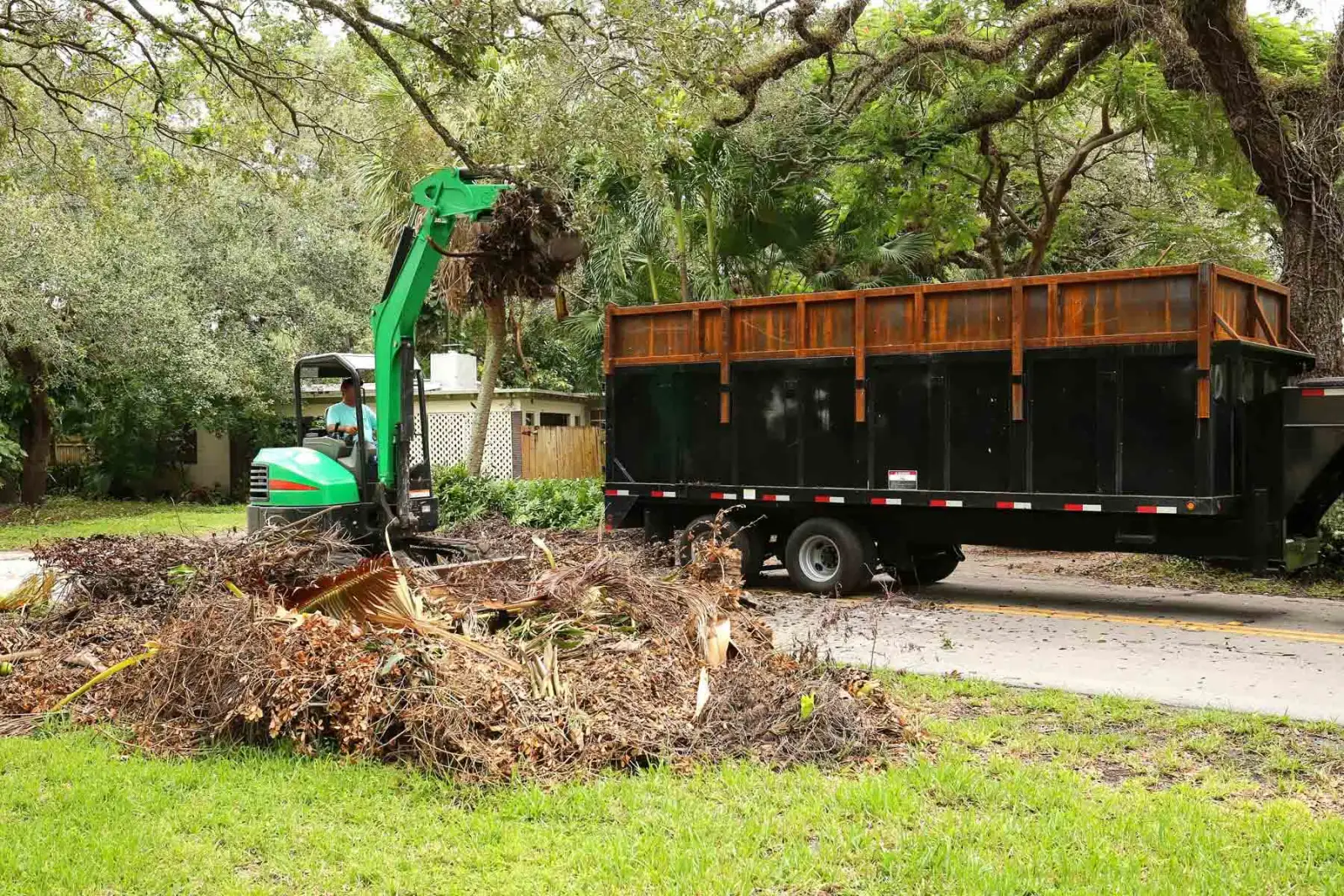
We haul land debris off your property with a dump truck and dump trailer. Brush piles, limbs, stumps, logs and storm debris get loaded with a machine and taken away.
Learn MoreWe run a mulching head on the skid steer and on the excavator. The skid steer covers open ground fast. The excavator reaches out over banks and wet spots that will not carry a machine.
Clearing, stump work, ditches and hauling all come from one company. You deal with one phone number from the first cut to the last load off the property.
We work about 40 miles out from town. That reaches Jefferson, Madison, Taylor, Leon and Wakulla counties, plus Thomas, Grady and Brooks counties across the Georgia line. Most of it is farm, timber and plantation land.
We come out, look at the land and tell you how we would run the job. The estimate is free and it comes from your actual ground.
Tell us where the property is and what you want cleared. Call or text (850) 815-0054, or send the form and we will set up a free estimate.
Tell us about the job. We will get right back to you.