
Do You Need a Gopher Tortoise Permit to Clear Land in Florida?
It depends on why you are clearing and how close the work comes to a burrow. The rules come from the Florida Fish and Wildlife Conservation Commission, or FWC. Clearing for development, like a lot for a new house, is the strict case. If that work comes within 25 feet of a potentially occupied burrow, FWC requires a gopher tortoise relocation permit first.
With 10 or fewer burrows, FWC points to its 10 or Fewer Burrows permit. Its 2026 mitigation table puts the contribution for that permit at $280. Sites with more than 10 burrows fall under Conservation permits. Moving tortoises off-site also means paying an authorized agent and a recipient site.
Farm, forestry and wildlife habitat work is a different case. FWC’s enforcement policy says gopher tortoise permits are not required for that work. Distance matters on any land, too. FWC says you may not need a permit if all work avoids burrows and tortoises by 25 feet or more.
Planning lot clearing for a new home? Settle the tortoise question before any machine moves. Check with FWC before you clear.
What counts as a disturbance?
FWC treats any type of work within 25 feet of a gopher tortoise burrow as a disturbance. That covers planned vegetation clearing, grading or ground leveling and construction. It covers heavy equipment staging areas too.
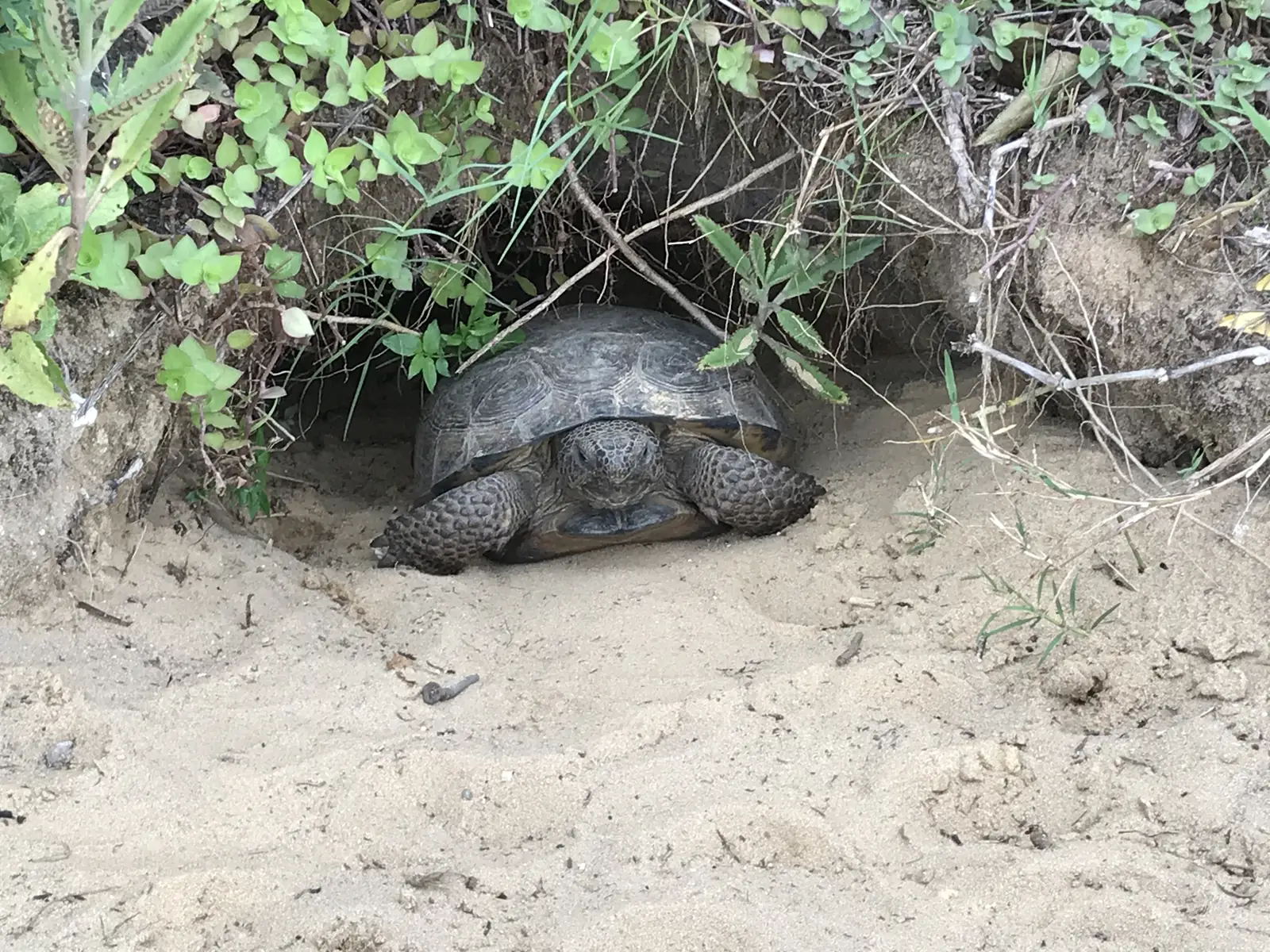
Gopher tortoises and their burrows are protected by state law. The tortoise stays state-listed as Threatened in Florida. FWC says tortoises live in upland habitat throughout Florida, including forests, pastures and yards. They share their burrows with more than 350 other species.
FWC’s enforcement policy lists signs that burrows may be present. Well-drained sandy soils are one, and so are sandhill, scrub and flatwoods. Disturbed versions count too, such as pastures, old fields, yards, power line corridors and roadsides.
FWC sorts burrows into two classes, potentially occupied or abandoned. A permit is required when a potentially occupied burrow will be disturbed or damaged. Routine yard maintenance and landscaping that does not harm tortoises or collapse burrows needs no permit.
Is farm, forestry or habitat work treated differently?
Yes. FWC’s enforcement policy says gopher tortoise permits are not required for agricultural or silvicultural work. Silvicultural means forestry. The same goes for activities intended to improve native wildlife habitat.
The policy lists tilling, planting, mowing, harvesting, prescribed burning, disking, roller-chopping and tree-cutting among those activities. Its example of an illegal take is about development. It names damaging, collapsing or covering a burrow during land clearing or grading for development, without a permit.
Clearing for farm use, such as pasture clearing, may fall under that policy. Ask FWC how it fits your land, and ask the same before clearing hunting land for food plots. Tortoises and burrows are still protected by state law. On farm and habitat work, we keep our machines 25 feet off every burrow.
How does a gopher tortoise survey work?
FWC calls it a 100% burrow survey, and it covers the entire development area. The surveyor walks straight, parallel lines called transects. FWC says they are spaced no more than 33 feet apart, and closer in thick cover. The lines cover the development area and everything within 25 feet of planned work.
Each burrow found gets classed as potentially occupied or abandoned. FWC’s enforcement policy says the burrow rules will not be applied where a landowner shows burrows are no longer used. The proof is a survey done to FWC guidelines.
Landowners can do the survey themselves for a 10 or Fewer Burrows permit. FWC recommends an agent for larger properties or thick vegetation that hides burrows.
Clearing brush first to make the survey easier can cost more. FWC says disturbing the vegetation or ground before surveys are complete may require a Disturbed Site permit. Mitigation for that permit runs higher than for other relocation permits.
Which gopher tortoise permit fits, and what does it cost?
Every relocation permit needs a mitigation contribution to FWC, paid before the permit is issued. FWC’s 2026 mitigation table sets these amounts.
| Permit | When it fits | FWC mitigation, 2026 table |
|---|---|---|
| 10 or Fewer Burrows | 10 or fewer burrows on the development site, and the work cannot avoid them all by 25 feet | $280 |
| Conservation, tier 1 | More than 10 burrows, tortoises moved to a long-term protected area | $280 for the first group of 10 burrows (up to five tortoises), then $419 each additional tortoise |
| Conservation | Tortoises moved to an unprotected recipient site | $7,545 per tortoise |
| Disturbed Site | Ground or vegetation disturbed before surveys or relocation were complete | $5,590 more per tortoise on top of the standard mitigation, or $2,096 more per tortoise for a single-family property owner |
For a Conservation permit, FWC asks for complete applications at least 90 days before you need the permit, and says most are processed in 45 days or less.
Under a 10 or Fewer Burrows permit, mitigation is the same whether tortoises move on-site or off-site. Tortoises moved off-site under that permit cannot go to an unprotected recipient site. When suitable habitat will remain, FWC says on-site relocation is more economical. The on-site recipient area needs at least 750 square feet of suitable habitat, at least 10 feet wide.
An off-site move needs an authorized gopher tortoise agent, who charges a fee. It also needs a recipient site that charges a fee to accept tortoises. Agent fees are quoted by the agent.
A 2025 presentation on FWC’s recipient site program listed the price per tortoise at $5,000 to $10,000. These are FWC and market figures, not EM Land Services prices.
How does a clearing job run around burrows?
The order runs survey, permit, relocation, then clearing. We schedule our clearing after any relocation is finished.
FWC says temporary exclusion fencing should be used whether a permit is required or not. It keeps tortoises out of the work area and protects the burrows outside it. After an on-site relocation, that fencing must be installed and maintained around the project site.
Before we start, flag every burrow you know about, since thick brush hides them. Our machines stay 25 feet off any burrow left in place. On farm and habitat ground, forestry mulching grinds brush in place, and the mulching head keeps the same 25 feet.
The tortoise permit is one piece of the paperwork. County clearing rules and water management district permits are in our land clearing permit guide.
Who handles the permit, and who clears the land?
FWC is the authority, and its Gopher Tortoise Permits page is the place to start. Its online permit locator map finds authorized agents and recipient sites. FWC says an authorized agent can handle the entire permit application, capture and relocation process.
We are not gopher tortoise agents, and we do not pull permits. We never handle or move a tortoise. Nothing here is legal advice.
EM Land Services clears land around Monticello once the permit side is done. See how our lot clearing service runs, or call or text (850) 815-0054 for a free estimate.